

What it means

The Library of Congress digital archive is a fantastic place to browse around.
I am currently using lots of their photos as sources for silhouettes in my work, and I find it interesting how some people’s characters really project off the page.
Like this group of kids, who were picking cranberries in Brown Mills, New Jersey, in September of 1910.
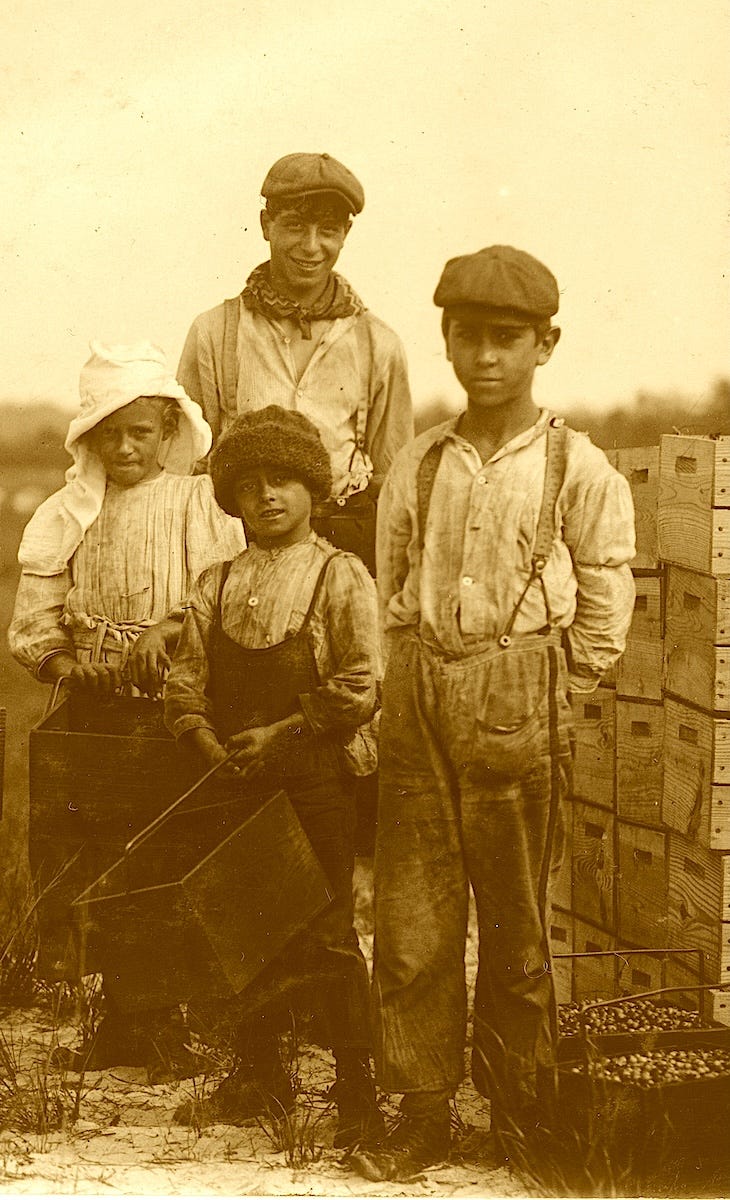
The month is important because this photograph was part of a series taken to document children being kept out of school for a month or two to pick cranberries with their families.
But don’t you almost feel like you know what these kids would be saying? What their personalities would be like?
Lots of the photos have names and ages, and this boy was Mike Peoki, age 9, from Philadelphia:
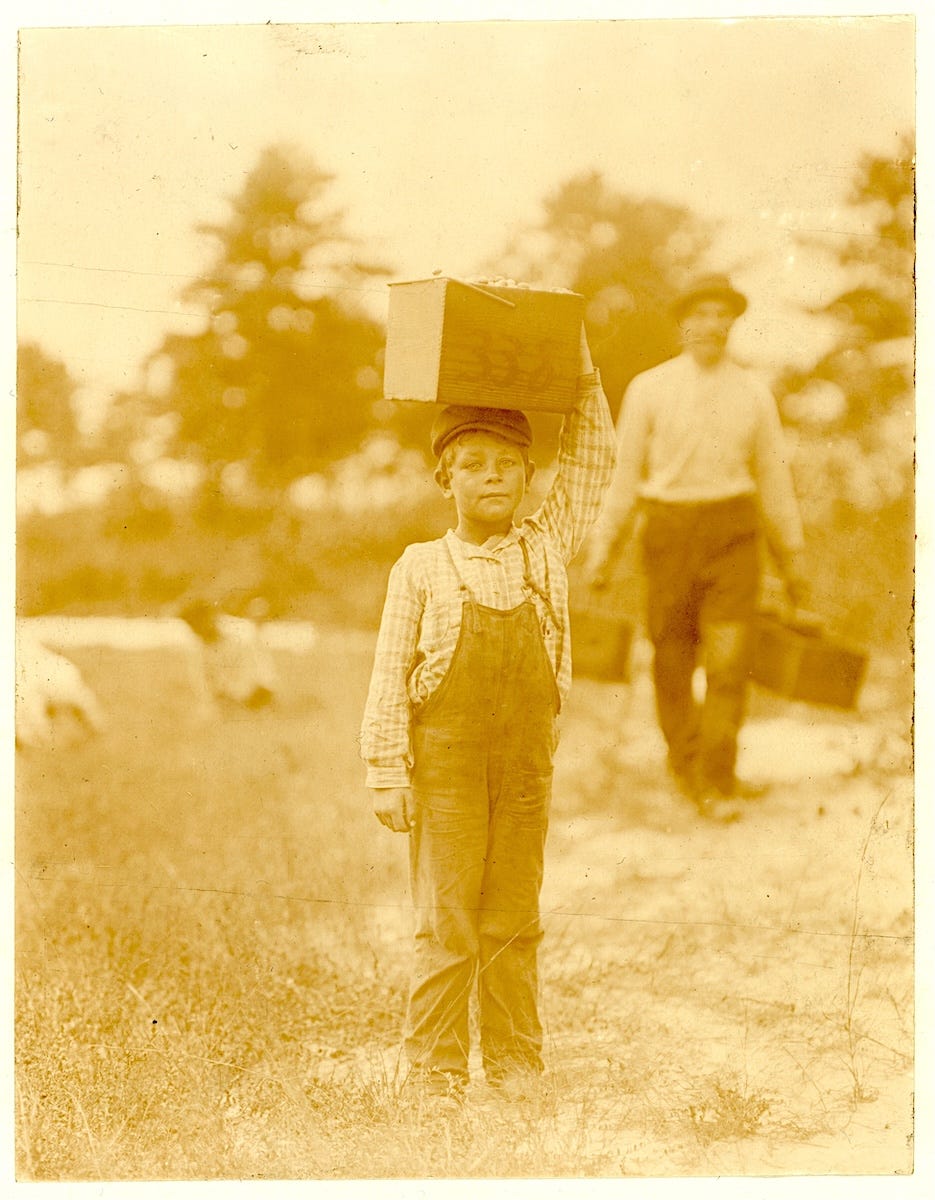
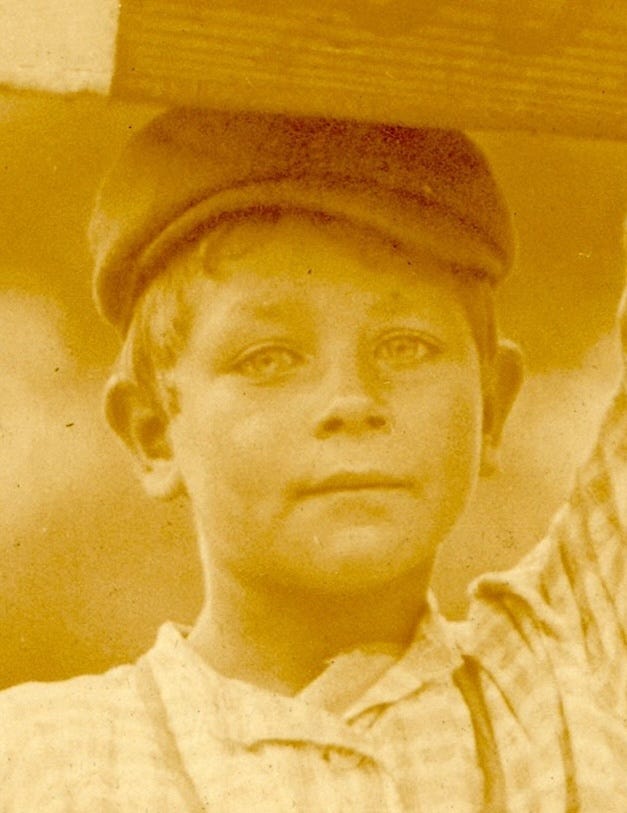
I bet the photographer, Lewis Hine - who did all of this child labor series for the National Child Labor Committee, and whose photographs helped bring about some of our first child labor laws - was sad not to have color film because this boy’s eyes would have been mesmerizing in real life.
And then check this one out:
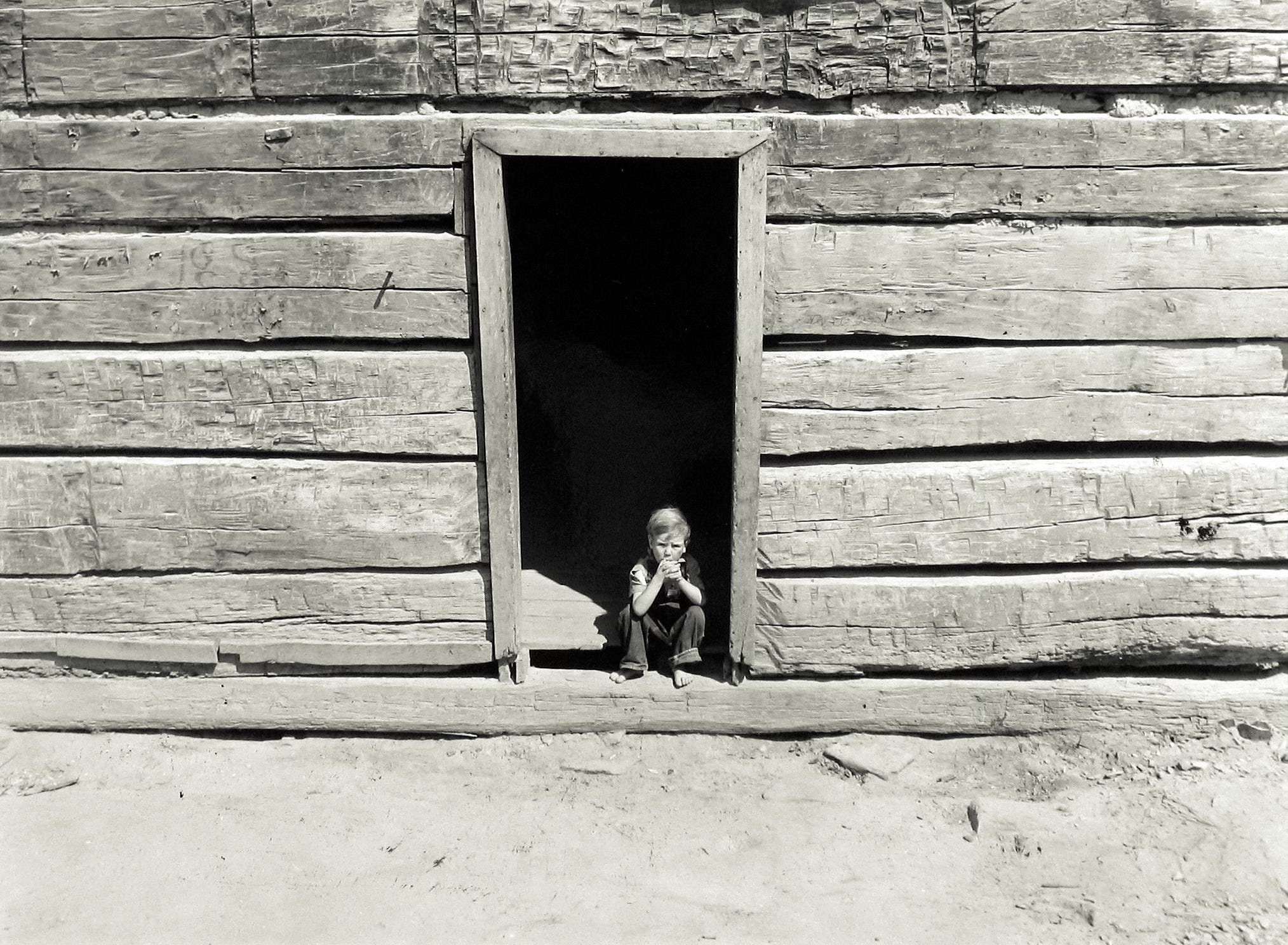
For many years I have known this as one of the images in the Thematic Apperception Test (TAT), a “projective psychological test” in which patients tell stories to a series of images and their stories are interpreted to gain insight into their unconscious thoughts, feelings, and motivations.
Since my early 20s I have had a side gig transcribing reports for doctors who handle psych evaluations for the court system here in California, and as a result, I’ve listened to hundreds of defendants tell stories to this series of pictures.
I can’t tell you any details, of course, but I can say that it still amazes me how much what people see is determined by their past experiences, good or bad. Including people who are mentally stable.
But there’s another story behind this photo.
All these years, I had never paid attention to the fact that this was the only photo in the TAT (most are paintings or drawings), and it had become so symbolic to me that I was a little shocked to find out this is not a staged scene…it’s a real little boy.
It turns out this photograph was taken by Marion Post Wolcott in 1939 near Jackson, Kentucky.
Wolcott (along with Dorothea Lange and Ben Shahn) spent years working for the Farm Security Administration, photographing those hardest hit by the Great Depression to document and publicize the need for federal assistance.
Last time I discussed my teenage fascination with the Freudian story quiz, and so now running into this photo and discovering its source was a wonderful coincidence, connecting the dots between my experience with that story quiz and the subsequent years of work in which I’ve witnessed people’s projective storytelling in action. It never gets old to me.
Over the years I’ve heard people make up hundreds of stories about this little boy. This photograph didn’t have a name attached, but I wonder now what his actual story was. Who he grew up to be.
And what would he think of his image being used for people to tell stories for almost a hundred years?
It’s just our imagination, this whole telling stories thing, but it’s also about reality. What stories we are choosing to see, to tell ourselves.
And if there’s one thing I’ve learned, it is this: We don’t get to dictate what happens, but we get to decide what it means.
It’s likely that the little boy could still be alive…taken in 1940…he’d be in his 90’s.
Is there a main story overall for this photo? I see that the sun is in his eyes…
You've been an inspiration since day one of our friendship! Thank you for the continued joy and enlightenment!